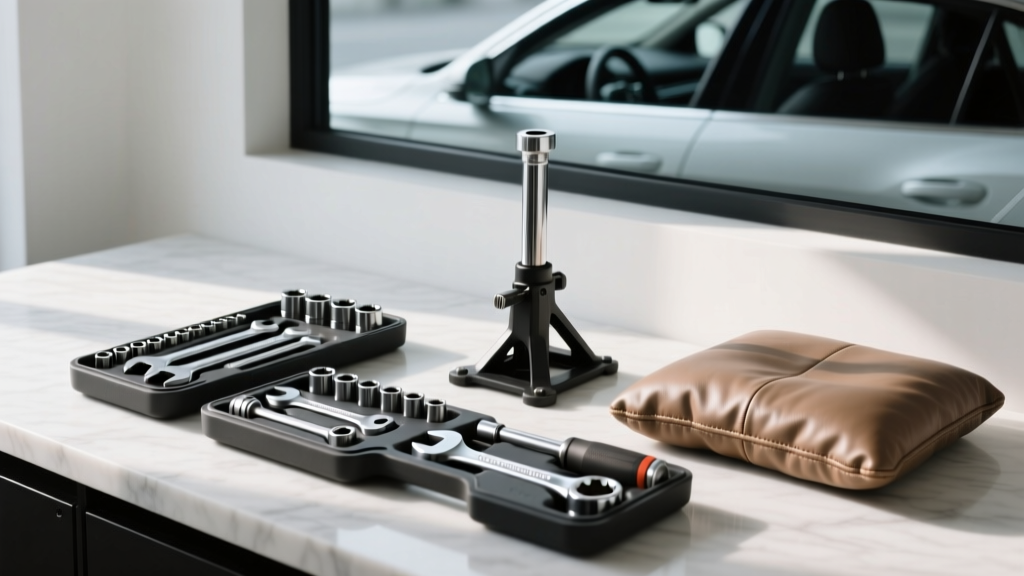
Jack and Wrench Care & Cleaning (2026)
Your jack and wrench set might live in the trunk, under the cargo floor, or tucked into a side cubby?and that?s exactly why it?s easy to forget about it. But when you actually need it (flat tire, loose battery terminal, roadside quick fix), you want everything clean, easy to grab, and working properly. A rusty lug wrench or a jack handle that won?t lock into place can turn a 10-minute tire change into a frustrating, messy ordeal.
Organization and basic care also protect your car?s interior. Dirty tools can stain carpet, leave greasy smears on trim, and create that lingering ?garage? odor in a cabin you work hard to keep fresh. If you?ve ever lifted the trunk floor and found a dusty jack rolling around or a wrench set clanking against sheet metal, you already know: keeping tools tidy is part of keeping your interior quiet, clean, and damage-free.
This guide covers how to clean, protect, and store your jack and wrenches the right way?plus practical product recommendations, real-world examples, and common mistakes that can shorten tool life or mess up your trunk.
What?s Typically in a Car Jack and Wrench Kit?
Most factory roadside kits include a few core items. Aftermarket kits can be more complete, but the care principles are the same.
- Scissor jack (common in compact cars and sedans)
- Bottle jack (often used in trucks/SUVs, sometimes aftermarket)
- Lug wrench / tire iron (L-shaped or cross wrench)
- Jack handle / crank rod (often multi-piece)
- Tow hook (on many modern cars, stored near the jack)
- Wheel lock key (if your car has locking lug nuts)
- Tool pouch, foam tray, or molded organizer
Real-world example: Many owners misplace the wheel lock key because it?s small and falls out of the organizer. The first time you get a flat, you realize you can?t remove the wheel. Organization isn?t ?nice to have??it?s functional safety.
Why Organization and Cleanliness Matter (Beyond Looks)
1) Faster roadside work
- Tools are immediately accessible and easy to identify.
- No digging through cargo, bags, or spare parts.
- Reduced chance of leaving pieces behind on the roadside.
2) Less interior wear and noise
- Loose metal tools can dent the spare tire well, scratch interior plastics, or tear trunk liners.
- Rattles and clunks often come from unsecured jacks and wrenches.
3) Longer tool life
- Dust and moisture accelerate rust, especially in humid climates.
- Grit in a scissor jack?s threads makes cranking harder and can lead to failure.
Safety First: Before You Clean or Maintain
- Work in a ventilated area if using cleaners or rust inhibitors.
- Wear gloves to avoid cuts and keep oils off cleaned surfaces.
- Don?t disassemble load-bearing components unless you know the tool?s design and torque requirements.
- Never rely on a car jack for under-vehicle work. This guide focuses on care/cleaning, but it?s worth repeating: use jack stands for any work under the car.
Step-by-Step: Clean and Protect Your Jack
The cleaning approach depends on whether you have a scissor jack or a bottle jack. Both benefit from removing grime, inspecting moving parts, and adding the right protection.
What You?ll Need
- Microfiber towels or shop rags
- Soft brush (old toothbrush works well)
- Mild all-purpose cleaner (APC) or warm soapy water
- Degreaser (optional, for heavy grime)
- Rust remover (only if needed)
- Light lubricant or protectant (more on choices below)
- Compressed air (optional, great for threads and tight crevices)
Step 1: Remove the kit and dry-clean first
- Pull the jack and tools out of the trunk/spare tire well.
- Shake off loose dirt and debris outside.
- Brush off dust around threads, hinges, and pivot points.
Tip: If your spare tire well has sand or road grit, vacuum it before reinstalling the kit. A clean storage area helps the tools stay clean longer.
Step 2: Wipe down exterior surfaces
- Spray a mild APC onto a towel (not directly on the jack if it?s near interior trim).
- Wipe all exposed metal surfaces, handles, and contact points.
- Use a soft brush for stubborn grime in corners.
For greasy buildup: Use a small amount of degreaser on a rag, then follow with a damp wipe to remove residue.
Step 3: Clean and inspect moving parts
- Scissor jack: Focus on the screw/threads, pivot pins, and the saddle (the top platform that contacts the car).
- Bottle jack: Wipe the ram, base, pump handle socket, and release valve area. Avoid flooding seals with harsh solvents.
Quick inspection checklist:
- Cracks, bent arms, or deformed saddle
- Stripped threads or excessive play
- Missing clips, pins, or handle pieces
- Sticky movement, binding, or grinding feel
Step 4: Address light rust (if present)
- For surface rust, use a rust remover gel or a light abrasive pad.
- Wipe clean and fully dry the area.
- Apply a protective coating (see next step).
Real-world example: Cars stored near the coast often develop ?flash rust? on trunk tools within a season. A quick rust treatment plus protectant prevents that rusty orange dust from staining your trunk carpet.
Step 5: Protect and lubricate (don?t overdo it)
Lubrication is where many people either do nothing?or they go too far and create a greasy mess in the spare tire compartment.
- Scissor jack threads: A light coat of white lithium grease or a synthetic grease works well. Apply sparingly and wipe off excess so it doesn?t attract grit.
- Pivot points: A small dab of grease or a drop of light oil is usually enough.
- Exterior metal: A thin rust-inhibiting film can help in humid climates.
Avoid: Heavy oily sprays that drip, soak foam organizers, and migrate into carpet. If you use a spray product, spray onto a rag first, then wipe the jack.
Step-by-Step: Clean and Maintain Wrenches (Lug Wrench, Tire Iron, Socket Tools)
Step 1: Remove grime and road residue
- Wipe down with APC on a microfiber towel.
- For textured handles or knurled grips, scrub lightly with a brush.
- Dry completely to prevent rust.
Step 2: Check the working ends
- Look for rounded edges on lug sockets.
- Inspect the wheel lock key for cracks or deformation.
- Ensure any extension bars fully seat and don?t wobble.
Step 3: Light protection
- If you live in a damp area, wipe the wrench with a thin protectant layer.
- Keep it dry and avoid storing it in a wet towel or damp pouch.
Tip for enthusiasts: If you run aftermarket wheels with thin-wall lug sockets, store the socket in a labeled pouch. The wrong socket can scratch wheel finishes fast.
Organization That Works: Storage Options for Trunks and Cargo Areas
The best storage setup keeps tools:
- Secure (no rattles)
- Clean (no grease transfer)
- Easy to access under stress
- Separated from interior fabrics
OEM Tray vs. Aftermarket Solutions
- OEM foam tray/molded organizer: Best for fit and rattle control. Downside: foam can absorb oily products if over-lubed.
- Tool roll: Excellent for organization and quick inventory. Choose one with a wipeable lining. Works well if your car doesn?t have an OEM tray.
- Hard plastic tool case: Great for keeping grime contained. Can slide around unless strapped down.
- Trunk side pocket organizer: Handy for small items like tow hook, gloves, flashlight. Make sure it won?t pop open while driving.
Recommended Add-Ons for a Cleaner, More Usable Kit
These aren?t mandatory, but they make real roadside work cleaner and faster.
- Nitrile gloves: Keeps your interior and steering wheel clean after handling tools.
- Small microfiber towel: For wiping hands and tools before putting them back.
- Compact kneeling pad or folded mat: Keeps knees and clothing clean on dirty pavement.
- Headlamp or small LED flashlight: Better than phone light when you need both hands.
- Zip bag for the wheel lock key: Prevents loss and corrosion; label it.
Product Recommendations: What?s Worth Buying?
Lubricants and protectants
- White lithium grease: Great for scissor jack threads; stays put better than thin oils.
- Synthetic grease (multi-purpose): Good all-around option if you already keep it in your garage.
- Rust inhibitor spray: Helpful in humid/coastal climates, but apply lightly to avoid interior mess.
Cleaning tools
- Soft detail brush/toothbrush: Perfect for threads and hinge points.
- Microfiber towels you don?t mind sacrificing: Tool cleaning can stain or snag towels reserved for paint.
- Small handheld vacuum: Useful for the spare tire well and trunk corners where grit collects.
Organization picks
- Tool roll with straps: Best balance of compactness and quick access.
- Hook-and-loop trunk straps: Secure a hard case so it doesn?t slide and thump over bumps.
Quick comparison: If your priority is no rattles, OEM trays and foam organizers win. If your priority is flexibility (adding sockets, breaker bar, tire plug kit), a tool roll or compact hard case is usually better.
Common Mistakes to Avoid
- Over-lubricating the jack: Excess grease attracts grit and can soak into foam trays and carpets.
- Storing tools wet: Even ?dry to the touch? can mean moisture trapped in a pouch, leading to rust.
- Forgetting the wheel lock key: Keep it in the same place every time?ideally secured in the organizer or labeled bag.
- Mixing loose metal tools with interior items: A jack rubbing against emergency triangles, first-aid kits, or audio gear can cause noise and damage.
- Not checking the jack after using it once: One muddy roadside tire change can leave grit in threads for months.
- Using harsh solvents on hydraulic bottle jacks: Strong chemicals can degrade seals. Stick to mild cleaners on painted surfaces and wipe carefully around seals.
How Often Should You Clean and Reorganize?
- Every 6 months: Quick wipe-down, check for rust, confirm all pieces are present.
- After any roadside use: Clean and dry before reinstalling in the trunk.
- Seasonal tip: Before winter, check for moisture in the spare tire well and add a light protectant to metal tools if you live in a road-salt area.
FAQ: Jack and Wrench Organization, Care, and Cleaning
1) Can I store my jack and wrenches inside the cabin instead of the trunk?
You can, but it?s usually not ideal. Tools can become projectiles in a crash if not secured, and they can damage interior trim. If you must store them in the cabin, use a hard case and strap it down to a cargo tie-down point.
2) What?s the best way to prevent rust on trunk tools?
Keep the storage area dry, wipe tools clean after use, and apply a thin rust-inhibiting protectant in humid climates. Avoid wet towels and don?t store tools near leaking spare tires or water intrusion points.
3) Should I grease the scissor jack screw?
Yes?lightly. A small amount of white lithium grease (or similar) on the threads makes operation smoother and reduces wear. Wipe off extra so it doesn?t attract dirt or drip into the organizer.
4) My trunk tools rattle. What?s the simplest fix?
Confirm the jack is seated in its factory bracket or tray, then add foam padding or a tool wrap where metal contacts metal. Also check that the spare tire hold-down is tight?loose spares are a common rattle source.
5) Can I wash the OEM foam organizer?
Usually yes, but do it gently. Vacuum first, then use mild soap and water with minimal soaking. Let it dry completely (sunlight or a warm, ventilated area) before reinstalling to avoid mildew smells in the trunk.
6) What?s a smart upgrade for enthusiasts who change wheels often?
A compact breaker bar and correct-size socket (plus a thin-wall socket if needed for aftermarket wheels) can make wheel changes easier than the small OEM lug wrench. Store it in a dedicated tool roll so it doesn?t bang around the cargo area.
Conclusion: A Cleaner Kit, a Cleaner Interior, Less Stress When It Counts
A well-organized jack and wrench kit is one of those small ownership habits that pays you back quietly: fewer rattles, fewer stains, less rust, and faster roadside fixes. If you want a simple plan, start here:
- Pull the kit out this weekend and vacuum the spare tire well.
- Wipe down the jack and wrenches, then dry them completely.
- Apply a small amount of grease to scissor jack threads (wipe excess).
- Secure everything in a tray, tool roll, or hard case?no loose metal.
- Add gloves, a small towel, and a labeled bag for the wheel lock key.
Keep it consistent, and the next time you need your tools, you?ll be glad they?re ready. For more practical car interior care tips and storage ideas, explore the latest guides on carinteriormix.com.